
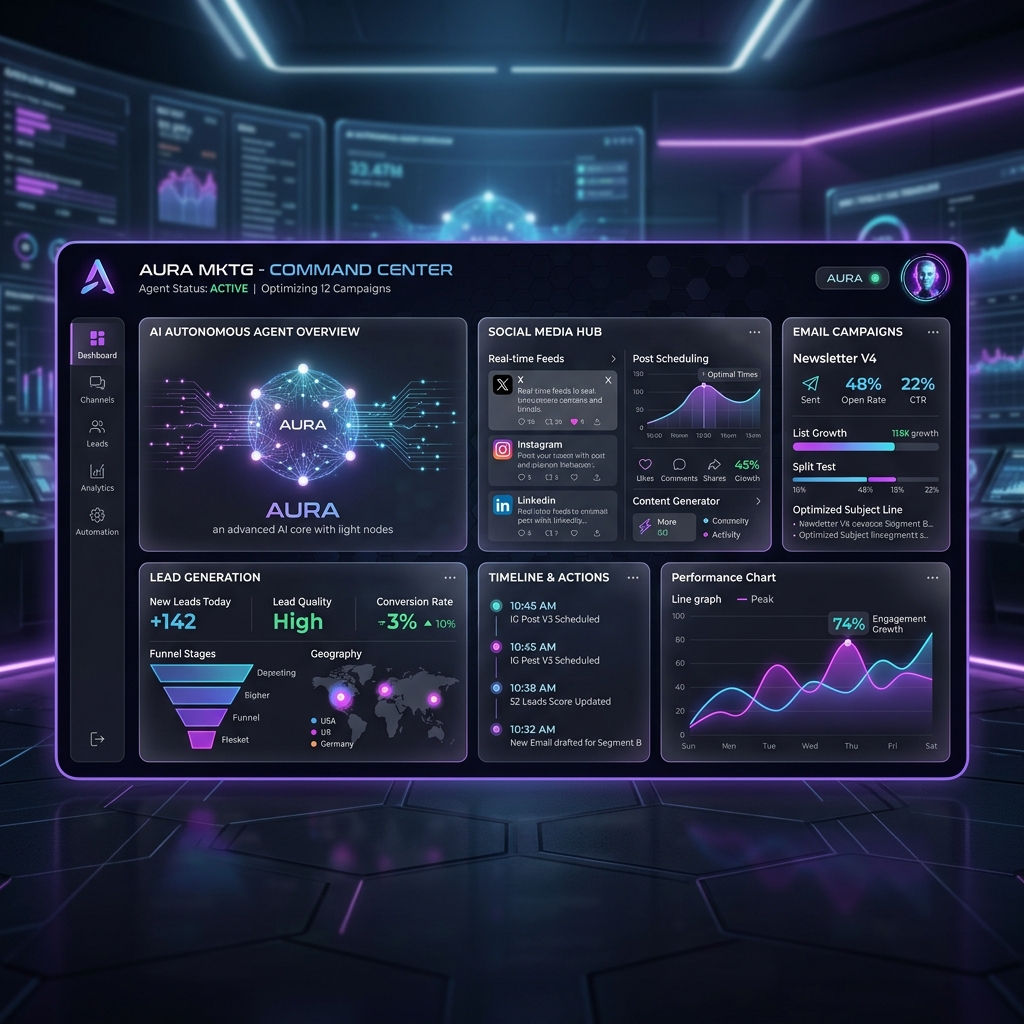
The age of manual marketing automation is officially dead. In 2026, relying on basic "if-this-then-that" rules or clunky, multi-tool integrations is the fastest way to lose market share. Today’s most successful businesses are moving toward agentic AI marketing automation—systems that don't just follow instructions, but actually think, strategize, and execute on their own.
When evaluating the market landscape, three distinct approaches emerge, represented by three major platforms: Zapier (the integration pioneer), HubSpot (the legacy all-in-one CRM), and Vect AI (the native autonomous marketing engine).
But which one is truly the best AI marketing automation platform for driving explosive business and social media growth?
In this comprehensive 2026 guide, we break down Vect AI, Zapier, and HubSpot across their core philosophies, AI capabilities, ease of use, pricing, and ultimate ROI to help you choose the right digital growth engine for your brand.
1. The Core Philosophy: Stitching vs. Hosting vs. Automating
To understand how these platforms perform, you first need to understand their fundamental architecture and the philosophy that drives their development.
Zapier: The Universal Translator
Zapier was built to solve a specific problem: applications didn't talk to each other. Its philosophy is simple: connect everything. With the introduction of Zapier Central and AI agents, it has tried to move from simple linear automation (moving data from Facebook Lead Ads to a Google Sheet) to more complex logic. However, Zapier is fundamentally an infrastructure tool. It requires you to bring your own strategy, your own AI prompts, and your own destination apps.
HubSpot: The Legacy All-in-One CRM
HubSpot started as an inbound marketing platform and evolved into a behemoth CRM. Its philosophy is: keep all your data in one place. Over the past few years, HubSpot has aggressively integrated AI into its platform (Content Assistant, ChatSpot). But at its core, HubSpot remains a database. Its AI is designed to make using that database easier—helping you draft an email faster or summarize a contact record—but it still heavily relies on a human operator to push the buttons.
Vect AI: The Autonomous Digital Employee
Vect AI was built natively in the age of large language models (LLMs). Its philosophy is radically different: marketing should drive itself. Vect AI operates on the concept of agentic workflows. It acts as a digital marketing team. You provide a goal—such as "Grow my LinkedIn audience and drive leads to my SaaS product"—and Vect AI's network of agents (researchers, copywriters, analysts) collaborate to execute that goal. It doesn't just connect tools or store data; it performs the labor.
2. Comparing AI Capabilities
Let’s look under the hood at how each platform handles artificial intelligence for marketing automation.
HubSpot’s AI: Helpful Assistants
HubSpot’s AI features are largely "copilots." They are embedded throughout the interface to assist the human marketer.
- Content Creation: You can highlight text in an email draft and ask the AI to rewrite it, or prompt it to generate a blog post outline.
- Predictive Analytics: HubSpot uses AI for lead scoring, analyzing historical data to predict which contacts are most likely to close.
- The Verdict: Excellent for incremental productivity gains. However, you still need a marketing team to sit in HubSpot all day, write the prompts, review the output, and hit "Send."
Zapier’s AI: Logical Routing
Zapier has integrated AI to build zaps faster and introduced AI agents capable of answering questions based on your data sources.
- AI Logic: You can use AI to format data or decide which path a workflow should take based on the sentiment of an incoming email.
- The Verdict: Zapier makes your underlying infrastructure smarter, but it is highly technical. Building a truly autonomous marketing campaign in Zapier requires extensive API knowledge and complex prompt engineering. It is not a marketer-friendly interface; it is a developer's sandbox.
Vect AI: True Agentic Automation

Vect AI introduces a paradigm shift from "assistance" to "autonomy."
- Market Signal Analyzer: Instead of waiting for a prompt, Vect AI actively monitors the web, social media, and competitor activity. When it detects a trending topic relevant to your niche, it proactively suggests a campaign.
- Autonomous Content Generation: With tools like the AI LinkedIn Post Generator and the AI Viral Video Script Generator, Vect AI creates platform-specific, high-converting content autonomously. It understands the nuances of each platform's algorithm.
- The Verdict: Vect AI is the only platform among the three that acts as a proactive digital employee. It bridges the gap between raw data and creative execution, handling the heavy lifting of continuous, 24/7 marketing operations.
3. Business Growth and B2B Lead Generation
How do these platforms directly impact your bottom line? B2B marketing in 2026 requires hyper-personalization at scale.
The HubSpot Approach to B2B
HubSpot is phenomenal at managing the pipeline once a lead enters it. Its marketing hub allows you to build complex email nurture sequences based on user behavior (e.g., website visits, form fills). However, generating those leads often requires manual effort—running ads, writing whitepapers, and hosting webinars. HubSpot tracks the success, but you do the work.
The Zapier Approach to B2B
With Zapier, you can build a highly customized lead-gen machine. For example, you could scrape LinkedIn, send the data to an OpenAI module to write a custom email, and then push that to an email sender. The downside? This workflow is incredibly fragile. If an API changes or a prompt breaks, the whole system collapses. It requires constant maintenance and a dedicated marketing operations (MarkOps) engineer.
The Vect AI Approach to B2B
Vect AI excels at the top and middle of the funnel. Using its Campaign Builder and AI SDR agents, Vect AI can autonomously identify target accounts, research their current pain points using real-time data, and craft highly personalized outreach sequences. Furthermore, Vect AI integrates seamlessly with your existing CRM. It can do the heavy lifting of identifying and warming up the lead, and then automatically push that qualified lead into your HubSpot database for the sales team to close. This creates a frictionless, high-volume pipeline.
4. Driving Social Media Growth
Social media in 2026 is no longer about just "posting consistently." It's about trendjacking, algorithm optimization, and multi-format content creation.
Social Media via Zapier
You can use Zapier to post to Twitter/X when you publish a new blog post via RSS. But this is the definition of "robotic" automation. Social platforms actively penalize automated, non-native content. Zapier cannot natively create a visually engaging carousel or a viral video script based on today's trends.
Social Media via HubSpot
HubSpot’s social tools are robust for scheduling and reporting. You can plan a month’s worth of content in a calendar view and track clicks. However, HubSpot still requires you to generate that content. Its AI can help draft a tweet, but it lacks the deep, native understanding of social virality and format constraints (like generating a hook for a short-form video).
Social Media via Vect AI
Social media growth is where Vect AI completely dominates the competition. It is built to operate at the speed of the social web.
- Trendjacking: Vect AI monitors trending conversations and immediately generates relevant content for your brand to participate in the dialogue.
- Format Adaptation: It doesn't just cross-post. It takes a core idea and creates a long-form SEO blog post, a 10-part Twitter thread, a LinkedIn carousel script, and a short-form video script—all optimized for each specific platform.
- Visual Monopoly: By integrating with image generation engines, Vect AI ensures your social feeds are visually stunning, preventing the "bland AI" look that plagues most automated accounts.
5. Ease of Use and Implementation
The best AI tool is useless if your team cannot figure out how to use it.
HubSpot: The Steep Enterprise Curve
HubSpot has an intuitive UI for basic tasks, but mastering its workflow automation, lead scoring, and reporting requires significant training. Most companies need to hire a specialized "HubSpot Admin" or an agency just to set it up correctly.
Zapier: The Developer's Dilemma
Zapier's basic triggers are easy. But building complex AI workflows with branching logic, webhook catches, and API calls requires a technical mindset. It is prone to error and can quickly become a tangled web of "zaps" that nobody on the marketing team understands how to fix.
Vect AI: The Marketer's Command Center
Vect AI was built for marketers, not developers. Its interface is designed around objectives rather than technical logic. You interact with Vect AI as you would a highly competent employee. You give it a brief, it returns a strategy, you approve it, and it executes. This low-friction environment allows small teams or even solo founders to operate with the output of a 20-person agency.
6. Pricing and ROI
HubSpot
HubSpot is notorious for its steep pricing curve. While you can start for free, accessing their advanced automation and AI tools requires moving to Professional or Enterprise tiers, which can easily cost between $800 to $3,600+ per month. Furthermore, you are charged based on the number of marketing contacts in your database, effectively punishing you for growing your audience.
Zapier
Zapier charges based on "tasks" (every time a zap moves data). While a basic plan is cheap, running complex AI workflows that consume dozens of tasks per execution can cause your bill to skyrocket unexpectedly. You are also paying for the AI models (like OpenAI API costs) separately.
Vect AI
Vect AI offers a transparent, value-driven pricing model. Because it is an all-in-one execution engine, you aren't paying for "tasks" or "API calls." You are paying for an autonomous system that directly replaces the need for disparate tools (copywriting software, scheduling apps, social listening tools). With plans designed to scale with your growth, Vect AI delivers an immediate and measurable ROI by reducing software bloat and dramatically increasing output.
7. The Future of AI Marketing in 2026 and Beyond
As we move deeper into 2026, the landscape of digital marketing will continue to undergo seismic shifts. The tools you choose today will dictate whether you lead your industry or struggle to catch up. Let's look at the trajectory of AI marketing and how platforms like Vect AI are preparing businesses for the inevitable future.
The Shift from "Generation" to "Orchestration"
For the past few years, the focus has been entirely on generative AI—using tools like ChatGPT or Jasper to write a quick blog post or create a neat graphic. That era is ending. The new frontier is orchestration. Businesses don't just need content; they need campaigns. They need an AI that can say, "I see a trend in our analytics. I'm going to create a landing page, draft an ad copy for Meta, schedule a five-part email sequence, and monitor the conversion rates." This level of orchestration is what separates true agentic platforms from basic AI writing assistants. Zapier is attempting to bridge this gap with automated workflows, but it lacks the creative intelligence required to execute the strategy natively. HubSpot is slowly adding these features, but they remain locked behind massive paywalls. Vect AI is building orchestration into its very foundation.
The Rise of Hyper-Personalized Buyer Journeys
Generic marketing is dead. In a world where consumers are bombarded by AI-generated noise, relevance is the only currency that matters. When comparing HubSpot and Vect AI on personalization, the difference is stark. HubSpot uses demographic data (e.g., "Insert First Name here") to personalize an email. Vect AI uses behavioral and contextual data. It can analyze a prospect's recent LinkedIn activity, their company's latest funding round, and the specific pain points of their industry to draft a completely unique, hyper-targeted message. This is how you break through the B2B dark funnel and generate high-intent leads without relying on cold calls.
The Importance of Brand Voice Architecture
One of the biggest concerns businesses have when adopting AI marketing automation is losing their unique voice. They fear sounding like a robot. Vect AI addresses this directly through its Brand Voice Architecture. Unlike Zapier (which relies on whatever generic prompt you feed it) or HubSpot (which uses basic tone adjustments), Vect AI allows you to train its autonomous agents on your specific brand guidelines, historical top-performing content, and unique stylistic preferences. The AI learns the nuances of your brand's personality, ensuring that every LinkedIn post, email, and blog article sounds unmistakably like you.
The Ultimate Goal: The Autonomous Revenue Engine
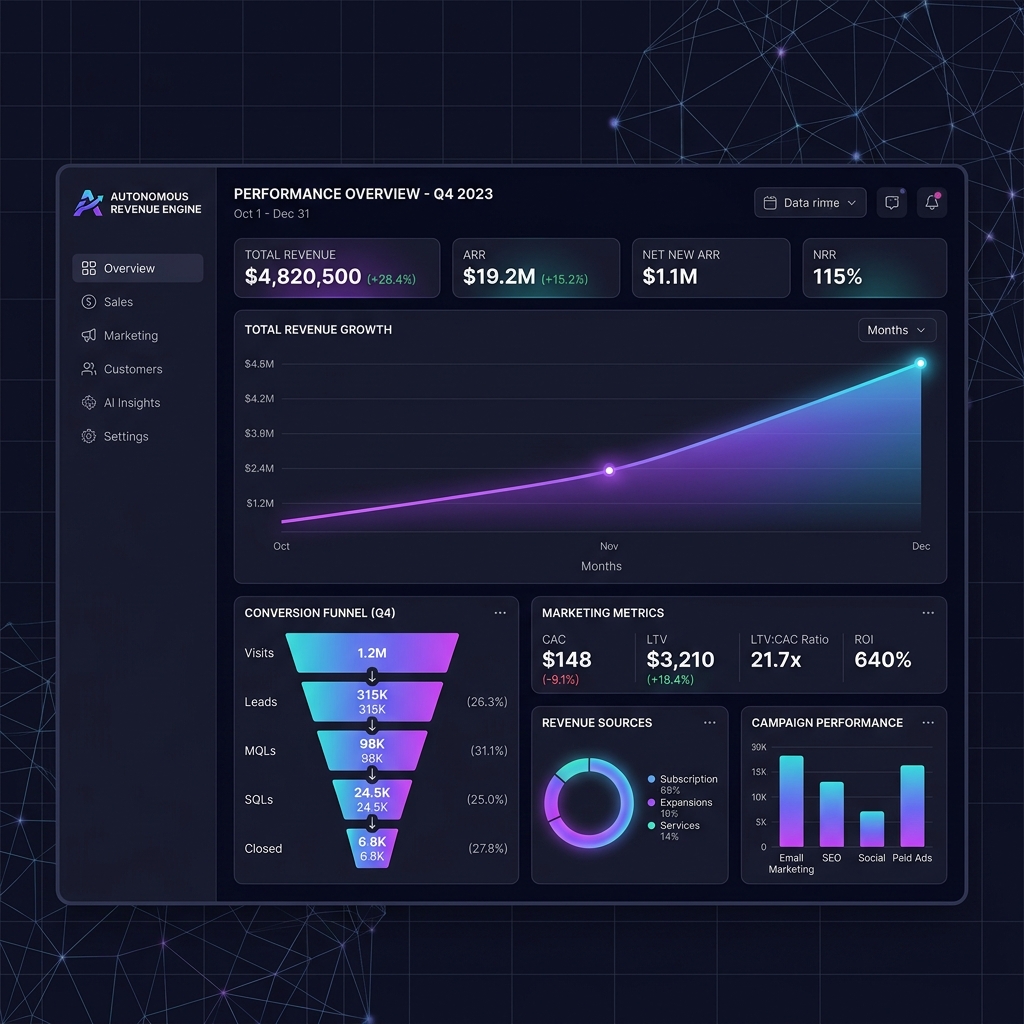
Marketing is not an isolated department; it is the engine that drives revenue. The ultimate goal of AI marketing automation is to build a self-sustaining revenue engine. This requires a platform that can handle the entire lifecycle—from initial brand awareness on social media to capturing the lead, nurturing them through educational content, and finally passing a highly qualified prospect to sales. This is where Vect AI's holistic approach shines. It doesn't just automate tasks; it automates the pipeline.
8. The Verdict: Why Vect AI is the Future of Marketing
If your goal in 2026 is simply to store contact data, HubSpot remains the gold standard for CRM. If your goal is to connect obscure proprietary software to Google Sheets, Zapier is the necessary glue.
But if your goal is business growth, social media dominance, and scalable lead generation, relying on legacy platforms is no longer sufficient. You need an autonomous engine that acts as a proactive digital employee.
Vect AI is the ultimate AI marketing automation platform because it combines intelligence with execution.
The Vect AI Advantage:
- Autonomous Content Creation: Stop staring at blank pages. Let Vect AI generate, format, and schedule highly engaging content across all your channels.
- Real-Time Trend Optimization: Never miss a viral opportunity. Vect AI reacts to the market faster than a human team ever could.
- Seamless Omni-Channel Campaigns: Launch cohesive campaigns that span SEO, email, LinkedIn, and Twitter with a single command.
- Significant Cost Reduction: Replace your scattered tech stack of AI writing tools, social schedulers, and expensive agencies with one unified command center.
The future of marketing belongs to those who leverage agentic workflows. Don't just automate your tasks; automate your growth.
Ready to hire your first autonomous digital marketing team? Explore Vect AI today and transform your business growth.
Looking to optimize specific channels? Check out our guides on using the AI LinkedIn Post Generator and dominating the B2B Dark Funnel with Vect AI.
Stop Reading. Start Scaling.
You have the blueprint. Now you need the engine. Launch the AI agent for "Autonomous Campaign Builder" and get results in minutes.
Launch Autonomous Campaign Builder