
SaaS growth is no longer about hiring more marketers. It is about deploying a system that scales autonomously.
For years, scaling a B2B SaaS startup meant building a massive, fragmented marketing stack. You had one tool for writing blogs, another for designing ad creatives, a third for SEO research, and Zapier to glue it all together. This "Frankenstein Stack" resulted in high overhead, disjointed messaging, and constant context switching.
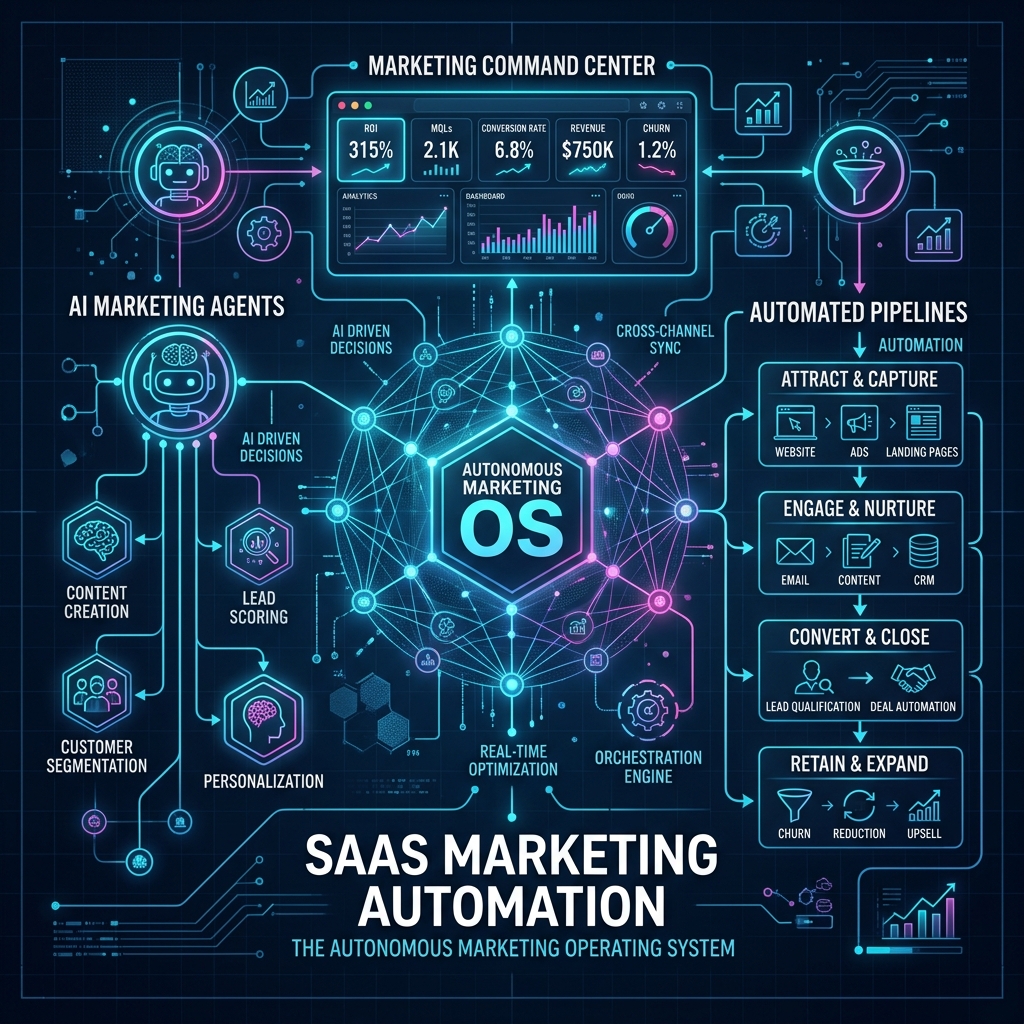
In 2026, the strategy has changed. Leading software companies are replacing fragmented workflows with SaaS Marketing Automation driven by an Autonomous Marketing OS.
By utilizing Autonomous AI Agents working in unison, you can build a self-optimizing engine that runs campaigns 24/7/365. In this guide, we will outline the blueprint to launch an Automated Marketing Strategy using Vect AI.
Traditional Automation vs. Autonomous Marketing OS
Winning in modern SaaS acquisition requires moving away from manual, task-based tools to a cohesive, goal-oriented system.
| Capability | Traditional SaaS Automation | Autonomous Marketing OS (Vect AI) |
|---|---|---|
| System Logic | Rigid, rule-based trigger-action loops | Goal-oriented reasoning and agent collaboration |
| Content Operations | Manual drafting with basic templates | Full-funnel Content Marketing Automation |
| Asset Consistency | Fragmented tools, high brand drift | Unified Brand Kernel protecting guidelines |
| Friction Level | High context switching across 10+ tabs | Zero friction, single Marketing Command Center |
| Optimization Loop | Weekly manual analysis and code edits | Real-time agentic evaluation & conversion patches |
The SaaS Marketing Command Center Architecture
An autonomous growth engine functions as a continuous feedback loop. External signals are detected, assets are generated, validation is performed, and pages are programmatically audited.
graph TD
    A[Market Signal Analyzer: Intent & Competitor Signals] --> B[Campaign Builder: Strategy & Orchestration]
    B --> C[SEO Content Strategist: Article Generation]
    B --> D[AI Ad Creative Studio: Visuals & Copy]
    C --> E[Resonance Engine: Buyer Persona Simulation]
    D --> E
    E --> F[Conversion Killer Detector: Final UX Audit & Publish]
1. Intent & Signal Detection
The engine starts by detecting real-time target opportunities. The Market Signal Analyzer scans social forums, search trends, and competitor changes to capture rising buyer pains before they peak.
2. Strategy Orchestration
The Campaign Builder receives these signals and acts as the project manager, mapping out the multi-channel campaign strategy and delegating tasks to specialized nodes.
3. Coordinated Asset Generation
The SEO Content Strategist drafts highly semantic articles, while the AI Ad Creative Studio creates corresponding visual creatives and ad copy, keeping output aligned with your brand guidelines.
4. Predictive Persona Simulation
Before deployment, the Resonance Engine tests the copy against cognitive profiles to ensure the messaging resonates with your ideal buyer.
5. Automated Conversion Audit
Finally, the Conversion Killer Detector scans the page layout to find and fix friction points, ensuring a high-converting user experience.
Core Pillars of SaaS Content Marketing Automation
To launch a successful automated program, structure your growth strategies around these core pillars:
1. Centralize Your Brand Context
For multiple AI agents to work together without drifting off-brand, they must access a single source of truth for guidelines, product value propositions, and competitor positioning.
- The Tactic: Configure your Brand Kernel. Once established, every outbound copywriter, ad generator, and video designer inherits this brand DNA automatically.
2. Connect Content to Product Use-Cases
Never write content in a vacuum. High-converting SaaS content must directly link reader pains to your product features.
- The Tactic: Programmatically map internal links. Ensure your automated articles link to specific tools (for example, directing readers to optimize their pages using the Conversion Killer Detector).
3. Deploy Multi-Channel Cohesion
Do not limit your automation to blogs. An effective automated campaign distributes the message across search engines, social media, and cold outbound.
- The Tactic: Use the Campaign Builder to generate supporting social posts and outreach sequences for every published article, keeping your message aligned across channels.
The SaaS Marketing Automation Checklist
Follow this checklist to activate your autonomous growth engine:
[ ]Define the Brand Kernel: Input your target personas, voice style, and positioning guidelines.[ ]Configure Signal Signals: Set target competitor sites and industry keywords inside the Market Signal Analyzer.[ ]Coordinate Content Pillars: Map your main acquisition topics using the SEO Content Strategist.[ ]Simulate Buyer Personas: Set up target customer profiles in the Resonance Engine for automated testing.[ ]Audit User Flows: Run your primary landing pages through the Conversion Killer Detector to optimize conversion rates.
Conclusion
Building a scalable SaaS business in 2026 requires moving past manual, disjointed marketing tools. By consolidating your growth stack into an Autonomous Marketing OS and utilizing coordinated agent networks, you execute campaigns faster, cheaper, and with higher precision.
Ready to automate your SaaS growth?
Log into Vect AI, open the Marketing Command Center, and deploy your autonomous marketing team today.
Stop Reading. Start Scaling.
You have the blueprint. Now you need the engine. Launch the AI agent for "Campaign Builder" and get results in minutes.
Launch Campaign Builder