
AI search is shifting from passive web scrapers to active, agentic queries. If your site’s data isn't exposed through standard agent protocols, your brand will be left out of the agentic loop.
In 2026, the rise of autonomous AI agents has completely disrupted traditional search traffic. Users no longer just type queries into search engines to get lists of links; they deploy AI agents to execute complex workflows. These agents perform actions like researching vendor features, comparing pricing tables, and pulling data directly from live platforms.
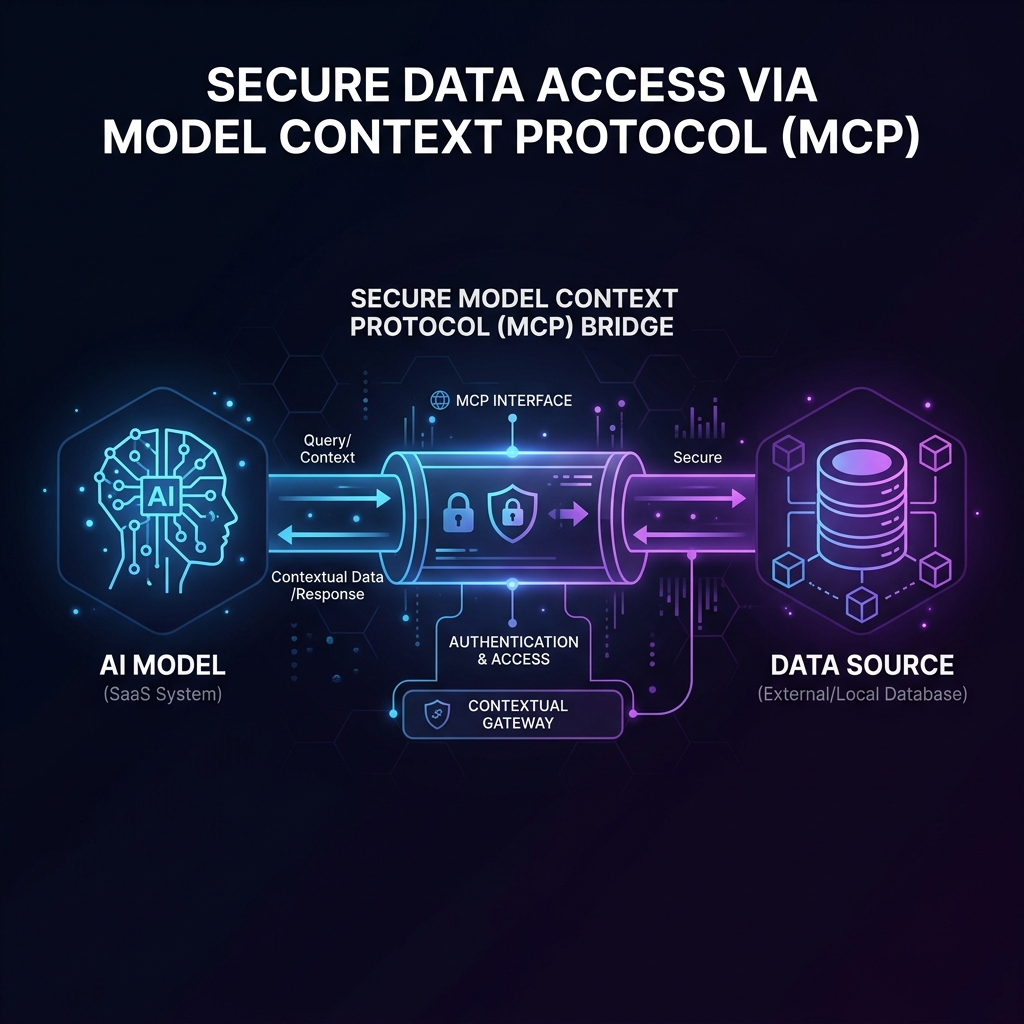
To enable this, AI agents rely on the Model Context Protocol (MCP). MCP acts as the universal bridge, allowing LLMs to safely read data and trigger tools from external systems. For modern brands, setting up an MCP server is the new frontier of Technical SEO.
In this guide, we explore how MCP works, compare it to traditional APIs, and detail how to design an agent-discoverable data layer using the Vect AI platform.
Traditional APIs vs. Model Context Protocol
Integrating third-party systems into AI models has historically been a fragmented process. MCP introduces a standard interface.
| Dimension | Traditional REST APIs | Model Context Protocol (MCP) |
|---|---|---|
| Data Format | Dynamic JSON payloads requiring custom parsing logic | Standardized JSON-RPC protocol optimized for LLM token ingestion |
| Integration Cost | High; requires writing custom API wrappers for every model | Low; write once, connect to any MCP-compliant AI host |
| Discovery | Manual developer documentation (Swagger / OpenAPI) | Automatic; model queries the server for list of available resources/tools |
| Execution | Fixed endpoints with strict parameter inputs | Dynamic; LLM chooses how and when to invoke resources or tools |
| State Management | Session-based, stateless, or custom token auth | Secure, bidirectional channel over stdio or SSE (Server-Sent Events) |
The MCP Agentic Retrieval Workflow
When an AI agent connects to your system via MCP, the workflow is fast, secure, and eliminates heavy HTML scraping overhead.
graph TD
    A[User requests research task] --> B[AI Client Host e.g. Claude, Custom Agent]
    B --> C[MCP Client queries MCP Server for tools & resources]
    C --> D[MCP Server retrieves real-time data from database/API]
    D --> E[MCP Server returns structured Markdown/JSON payload]
    E --> F[AI Host synthesizes answer with direct brand citation]
1. Discovery Phase
The AI agent initiates the handshake with your MCP server. It receives a list of available resources (read-only documents, live databases) and tools (functions that can execute actions or return dynamic lookups).
2. Context Ingestion
Instead of crawling and scraping HTML layouts, the agent queries specific resources via MCP. The server returns clean, concise Markdown or JSON. This ensures the model receives high-fidelity facts without web bloat.
3. Execution & Synthesis
The AI host merges the structured context into its prompt context window and formulates the response. Because the connection is direct and structured, attribution is precise, resulting in authoritative citations for your brand.
The MCP SEO Optimization Blueprint
Implement these core steps to prepare your brand's digital footprint for the Model Context Protocol era.
1. Build an "Agent-Ready" Resource Server
The easiest way to feed AI agents is to expose your public content clusters, documentation, and product catalogs as read-only MCP resources.
- The Tactic: Develop an MCP server using the official SDK (TypeScript or Python). Expose your key marketing pages or product sheets as resources.
- Example: Offer a resource path like
catalog://products/pricingthat returns a clean Markdown table of your current SaaS tiers.
2. Provide Highly Descriptive Tool Schemas
When defining tools on your MCP server, write extremely clear descriptions for the AI model. AI clients read these descriptions to decide which tool to invoke.
- The Tactic: Use precise natural language in your tool parameters.
- Example: Use description fields like: "Retrieves the most recent customer review data and integration capabilities for Vect AI to compare with competitors."
3. Implement Strict Data Validation
Unlike traditional users, AI agents can make erratic API calls if schemas are ambiguous. Secure your data layer.
- The Tactic: Implement rigorous validation (e.g., Zod schemas in TypeScript) on your MCP tool inputs. Return clear, error-correcting messages if the agent sends malformed requests.
4. Link MCP to Your Semantic Search (RAG)
Combine MCP with a vector database. This allows agents to execute semantic queries against your knowledge base directly through the protocol.
- The Tactic: Connect your MCP server to a vector search tool. When an agent queries a broad topic, the tool runs a vector search and returns only the top matching chunks. With Vect AI's SEO Content Strategist, this pipeline is automatically generated for your public endpoints.
Action Checklist: Build Your MCP SEO Engine
Follow this checklist to make your organization discoverable to Model Context Protocol clients:
[ ]Identify Data Assets: List all high-intent product details, calculators, and comparison tables that AI agents would find valuable.[ ]Build the MCP Server: Use the official@modelcontextprotocol/sdkto set up a server running over stdio or Server-Sent Events (SSE).[ ]Document Schemas: Write descriptive, natural language summaries for all exposed resources and tools.[ ]Add to Crawler Governance: Reference your MCP endpoint or server configuration in/llms.txtso crawlers know it exists.[ ]Deploy and Monitor: Track agent connections and queries. Use Vect AI's Market Signal Analyzer to analyze which terms agents are calling most frequently.
Conclusion
The evolution of search is moving toward direct connectivity. By deploying a Model Context Protocol server, you bypass the inaccuracies of web scraping and provide AI agents with a direct, high-fidelity link to your brand's data. Brands that provide these protocols first will secure the dominant share of voice in the emerging agentic economy.
Ready to build your agentic discovery engine?
Log into Vect AI, open the SEO Content Strategist, and deploy your MCP integration layer today.
Stop Reading. Start Scaling.
You have the blueprint. Now you need the engine. Launch the AI agent for "SEO Content Strategist" and get results in minutes.
Launch SEO Content Strategist